Research estimates that about 25 percent of committed monogamous relationships face infidelity at some stage of coupledom. After infidelity, many women make misguided assumptions about themselves, the relationship and their partner based on myths that permeate our culture. The first part of this two part series focused on the myth that the relationship is over, and myths that the infidelity happened because the unfaithful partner fell out of love or attraction or because of their narcissism. This second part of this two part series, will bust myths #5 to# 7 of the most common myths believed by betrayed partners.
5. If I had just been less needy…they wouldn’t have cheated
6. I should have known
7. I will be alone forever
Myth #5 “If I had just been less needy…they wouldn’t have cheated”
Women who have discovered their partner’s betrayal often tearfully exclaim: “I expressed my insecurity, and pushed them away!” It is important to distinguish between expressing one’s needs and being “needy”. All humans have needs, and communicating one’s needs and desires is a cornerstone of any good relationship. Because most people don’t enter relationships with the ability to ask for what they need in a way that resonates with their partner, another cornerstone is how to set expectations and boundaries. If the cheating partner/spouse did feel overwhelmed or distressed by their wife’s or girlfriend’s expression of needs or their anxious attachment style, it is their responsibility to set clear expectations about how they are or aren’t able to support her.
As my colleague Esther Perel stated about recent expectations of marriage in The State of Affairs: “So we come to one person, and we basically are asking them to give us what once an entire village used to provide.” The weight and responsibility of helping someone you love through negative emotions may be overwhelming. It can create negative relationship cycles and diminish both emotional and physical attraction between partners over time. In post-infidelity couples therapy, I encourage each partner in a couple to do some deep inquiry as to what their needs are, re-learn how to express these needs to their partner, and learn to accept that their partner may not be capable of holding all of their needs. In betrayed women’s coaching groups, clients are encouraged to support one another as they review what they were looking for from their partner, why they may have grown up expecting certain psychological support, how they communicated those needs, and whether their partner is equipped to provide what they need.
Myth #6 “I should have known”
Source: Deposit Photo/AndreyPopov
Betrayed partners frequently fall prey to the idea “I should have known.” They beat themselves up for not knowing that their partner was having an emotional or physical affair. In Buddhist tradition, this kind of emotional self-flagellation is called the second arrow of suffering and increases the pain itself. In most cases, the infidelity revelation comes out of the blue. In others, betrayed women had an intuition or gut feeling about the infidelity, but their partner lied and gaslit them with such dexterity that they ignored that intuition or gut feeling.
Years of clinical experience has shown me that after infidelity discovery, in addition to loss of trust in their partner, most hurt partners experience a loss of trust in themselves. They stop trusting their perceptions, gut instincts, and abilities to judge people’s character. Part of the healing process is rebuilding and reclaiming the trust in one’s authentic self and pushing back against the harsh inner critic–the internal voice that insidiously whispers: “I should have known.”
Myth #7 “I will never find another partner”
Almost all my female-identifying clients facing the potential end to their marriage or relationship after infidelity fear they will never find another partner. This catastrophic thinking can prevent someone from ending their monogamous agreement even when they know it is the best choice for them. According to CDC research, 54 percent of divorced women remarry within five years and 75 percent of divorced women remarry within 10 years.
If a woman’s relationship does end, individual or group coaching supports her growth as she gains a deeper understanding and healing of the family of origin wounds both you and your partner brought into that relationship. She can learn skills to calm her intrusive thoughts, mourn the loss of the relationship, develop more communication skills to articulate her own desires and needs, expand the village of folks she can depend on for these needs and regain trust in herself to make strong, grounded decisions about future relationships–and ultimately build a stronger, more fulfilling relationship. It takes a village to raise a child and it certainly takes a village to help a woman heal from partner betrayal.
Source: Deposit Photo/Wavebreakmedia
Sex therapists’ goal when working with betrayed partners whether in individual therapy, couples therapy, or in a women’s group setting is to create a safe space to mourn the loss of what was, bust cultural myths around infidelity, and explore the deeper meaning of the relationship’s breakdown. Through this work, they can emerge with a deeper knowledge of what kind of life they want for themselves, whether they create a stronger, wiser second iteration of the relationship to the partner who betrayed their monogamous agreement, or decide to forge ahead with a new life as a stronger, supported single woman.
Most sex therapists, at one time or another, find themselves sitting across from a woman who has just discovered that her husband, boyfriend, wife, or partner has cheated on them. Before those sessions, I work to ground myself so that I can hold space for their shocked, hurt, and rageful reactions.
Research estimates that up to 25 percent of committed monogamous relationships struggle with infidelity at some stage of coupledom. Whether that infidelity is emotional or sexual, involves texting, online chat rooms, or meetings in person, is an ongoing affair, or one-time hookup, involves paid sex workers, or sexually compulsive behavior–infidelity’s emotional impact is immense. It is akin to the fallout of an earthquake in which the ground under the hurt partner has cracked open to reveal the seismic fault lines of the relationship below.
Many women make misguided assumptions about themselves, the relationship, and their partner based on infidelity myths that permeate our culture. This is the first blog of a two-part series, which will bust myths 1 to 4 of the 7 most common myths believed by betrayed women. Part 2 will cover myths 5 to 7.
The relationship is over
My partner/spouse cheated because they don’t love me
My partner/spouse isn’t attracted to me anymore
My partner’s narcissism is the reason they cheated
Myth #1 “The relationship is over”
Many of my clients whose partners have had extra-monogamous affairs or casual hookups fear that if they don’t leave, she is and will be seen by others as a loser who is letting someone “walk all over” her. Feeding this fear is the common cultural belief that infidelity means the end of the relationship–but that is not true. In fact, according to a study by Marin et al., 60 to 80 percent of married couples remain together after an instance of infidelity.
Whether a woman wants to remain or leave their relationship, it is crucial that the therapeutic space is left judgment free. It’s critical that hurt partners are encouraged to express all their divergent emotions in treatment after infidelity discovery. While friends or family members in their lives may express strong opinions about what they ought to do (frequently based on these cultural tropes), the therapy or coaching should be centered on exercises, techniques and reflections that allows each woman to wade through those divergent emotions–including relationship ambivalence.
Source: DepositPhoto/Syda_Productions
While I don’t encourage couples to simply return to the way their relationship was before the infidelity, it is common that betrayed partners experience denial and go back into their previous cycles in order to stabilize their roller coaster emotions. This denial halts the therapeutic process. Unless the couple is able to identify what precipitated the betrayal, it will be challenging to rebuild a stronger, more authentic relationship. It sometimes takes up to a year for couples to repair their relationship/marriage after infidelity–but it is work that has long standing benefits.
Myth #2 “My partner cheated because they don’t love me”
There are a number of reasons that people commit infidelity. Some people may cheat because they have fallen out of love with their partner. Others cheat to explore a secret sexual interest, because of a need for intimacy that has been lost due to a variety of circumstances, or due to a desperate compulsive need for positive reinforcement after a childhood filled with bullying or abuse. While these are not excuses for breaking a monogamy agreement or marriage vow, they are explanations based on emotions that can co-exist with the love a person has for their partner.
All of these explanations are rooted in the person who cheats’ inability to communicate their emotions or needs to their partner. Often, the straying partner didn’t grow up around examples of securely attached romantic relationships, or relationships that model how to communicate relational needs. With no tools to communicate with their partner, someone may find themselves doing whatever it takes to have their needs met–even going against their own ethics or values. In many cases it is through therapy that the betrayed partner is able to see that it isn’t a lack of love for them that led to infidelity, but rather their partners’ internalized fear and desperation.
Myth #3 “My partner isn’t attracted to me anymore”
When my clients tell me they fear their partner is no longer attracted to or turned on by them, I try to educate and expand their definition of “attraction”. Our culture tends to define attraction as purely sexual–which is not the case. Someone can be attracted to their partner’s confidence, sense of humor and fun, openness, emotional intelligence, or intellect and wit. Sexual attraction is complex.
According to Janssen and Bancroft’s Dual Control Model of sexuality, the source of sexual excitation (or what we sex therapists refer to as the gas pedal) can be squashed by an increase in inhibitory responses (or the brake pedal). A person’s inhibitory response can increase due to anxiety, stress, panic, awkwardness, physical pain, or psychiatric disorders. And often, someone experiencing one of these inhibitory responses holds tremendous shame for having them. Untreated shame may lead people to have breakdowns, relapses, or result in internal split selves–which many partners consciously or unconsciously hide from their partners. Shame and secrets lead to a disembodied or disassociated sexuality rather than integrated or aligned sex that combines love and lust.
Source: DepositPhoto/AndrewLozovyi
Myth #4 “My partner’s narcissism is the reason they cheated”
Many people attribute infidelity to characteristics associated with narcissism. These include an increased sexual appetite, more permissive attitudes towards casual sex, and overly positive beliefs about their abilities–including their ability to hide their extra-monogamous relationship or convince both partners to forgive their infidelity. While my clients often report that their partner has some of these traits, it does not mean that they have Narcissistic Personality Disorder.
I have found that some behaviors the betrayed partner interprets as narcissism is actually the result of resentments held by the person who cheats. Often, the betrayer will tell me that they feel their partner is ignoring their emotional or sexual needs. They might feel vindicated in breaking the monogamy agreement because they believe they are entitled to having their needs met and that their partner “let them down”. This kind of attachment breakdown may also be the result of growing up with poor models of communication.
COMING SOON! 7 Myths about Infidelity Believed by Betrayed Partners: Part 2
Many people do not realize that Erectile Disorder (ED), the inability to achieve or sustain an erection sufficient for intercourse, is extremely common. Today, 1 in every 10 men in the United States experiences ED, and by the year 2025 the prevalence of ED is expected to increase ultimately affecting an estimated 322 million men. ED affects every aspect of a man’s life–their physical health, mental health, and relational health. It affects not only the person with the condition, but their partners.
When men come in for individual sex therapy with the goal of improving their sexual functioning, I ask those currently in committed relationships if they would be open to inviting their partners, wives, or husbands to couples sex therapy. Why? Because when you are unable to get or keep your erection, a partner may not know how to react, how to be helpful, and may feel like they are doing something wrong. It can impact that person’s sexual self identity if they perceive the inability to sexually connect to be a reflection of their desirability. Why, they think, are they no longer into me?
Erectile Disorder
People with ED may be unable to get an erection sometimes, be able to get an erection but not keep it long enough for satisfactory sexual intercourse, or never be able to get an erection. To satisfy the diagnosis of Erectile Disorder in the DSM 5, one must have been having these challenges for at least six months andduring at least 75 percent of their past sexual scenarios. ED can be diagnosed in conversation with a sex therapist or your medical provider who will ask about your health history and those experiences where you lost or couldn’t attain an erection.
While a less frequent occurrence in younger men, a study in The Journal of Sexual Medicine found that ED affects about 26 percent of men under the age of 40. Another study highlighting ED in young men found that 8 percent of men between the ages of 20 and 29, and 11 percent of males ages 30 to 39 have some form of ED.
The increasing prevalence of ED in young men is an important phenomenon. Particularly because the psychological burden of Erectile Disorder in young men can sometimes be greater as they are in a time in their lives when society expects them to be more sexually virile and, in many cultures, more active. ED has drastically impacted the dating lives of the younger men I see in my clinical practice. They often have avoided dating apps for fear they will be expected to initiate sexual activity after several dates with the same person and unable to perform. Some young men are turned on by texting with a potential partner for casual sex or hookup, but end up self-pleasuring with sexually explicit media or porn rather then asking the person to meet up and risking the embarrassment and misunderstanding that can follow an episode of ED.
Causes of Erectile Disorder
The most common cause of ED is vascular disease. 64 percent of difficulty getting and maintaining an erection are associated with heart attack and 57 percent with bypass surgery. Up to 75 percent of men with diabetes, 40 percent of men with renal failure, and 30 percent of men with COPD have some experience with Erectile Disorder. Psychological causes of ED are wide ranging. They include stress, depression, anxiety, feelings of guilt, low body image, issues in a man’s relationship, or sleep disorders.
As more young people are affected by Erectile Disorder, there is an increased risk that their doctor assumes that their ED is the result of a psychogenic cause without conducting a proper examination. Their doctor may offer the young man a prescription of a PDE5 inhibitor like Tadalafil (generic for Cialis) or Sildenafil (generic Viagra), or refer them to a sex therapist. However, similar to ED in middle-aged or older men, ED in young men can be the consequence of the combination of organic, psychological, and relational factors–all of which must be addressed in appropriate clinical treatment.
In particular, Erectile Disorder in young men–even more than in older men–is considered a harbinger of Cardiovascular Disease (CVD). As a sex therapist, I go through a complete biopsychosocial sexual history to help my clients figure out if their ED is an early warning signal of CVD so that they might work with their medical doctors and find critical preventative interventions if necessary.
Co-occurring Sexual Disorders
Most people don’t realize that there are a number of sexual disorders that co-occur in men who experience ED (most commonly different forms of ejaculatory dysfunction). One co-occurring sexual disorder is premature ejaculation, or what we sex therapists call uncontrolled ejaculation. A recent study found that 76.3 percent of its participants who report premature ejaculation also had an Erectile Disorder diagnosis. Premature ejaculation is relatively common, experienced by about 30 percent of men. Premature ejaculation can cause men shame and anxiety that their erections subside. Anxiety is one of the psychological experiences that causes loss of blood flow, and if there’s one thing a penis needs to keep erect, it is blood flow. Some of my male clients who come in because of their ED have never spoken about their premature ejaculation issue due to the embarrassment of not being able to control how long they last.
Source: Wavebreakmedia/Deposit photo
Another co-occurring sexual disorder, though uncommon, is delayed ejaculation–or difficulty achieving orgasm despite adequate sexual stimulation. These are the men who can have penetrative sex for 30 minutes to an hour without climaxing. While American late night comics might make jokes about how fulfilled these men (and their partners) must be, the opposite is usually the case. Couples who come in with this problem often express disappointment that they can’t get pregnant the “normal” way. A delayed ejaculation client’s partner might feel they’re not truly loved or desired by a partner who can’t seem to ejaculate inside them. A female partner may avoid penetration because of the pain that long sessions of thrusting cause her vaginal opening. Over time, a man might begin to lose his erection in anticipation of the disappointment he and his partner will feel when he cannot climax.
These co-occurring conditions are often missed by general therapists. Their diagnosis requires a thorough assessment process including a deep dive sexual history interview and referral to a sexual health doctor, both of which are important in addressing a man’s overall sexual health.
Psychological Contributors to Erectile Disorder
Psychological impotence, or erectile disorder caused by psychological symptoms, is even more common than other forms of ED. It is estimated that up to 20 percent of men in the United States have experienced ED as the result of a negative mental health state. A survey of men living in the UK found that more than 50 percent of men in their 30s experience ED. About half of those who struggle with ED cite stress as the reason they cannot get or keep an erection.
One of the most common negative emotions that causes ED is performance anxiety, and rates of performance anxiety seem to be rising among young men. Up to 25 percent of men experience sexual performance anxiety. Sexual performance anxiety can be caused by a number of things including body image issues, low self-esteem, mental health issues like depression and anxiety, stress, previous sexual trauma, and feeling emotionally disconnected from your partner. The shame my clients feel around their sexual dysfunction worsen their performance anxiety and prevent them from talking about and addressing the issue.
Men may wait many months before seeking out sex therapy because they feel like they should be able to take care of this problem on their own. Men who are survivors of trauma, whether it’s sexual trauma or some other kind of trauma, may not connect their current ED problem with their past trauma on their own. I let clients know it takes tremendous courage to reach out for help and begin the healing journey of reclaiming their sexual pleasure and functioning.
Increased recreational use of erectile dysfunction medication
Phosphodiesterase type 5 (PDE5) inhibitors like sildenafil (Viagra), tadalafil (Cialis), vardenafil (Levitra or Staxyn), and other oral erectile dysfunction medications, have become a popular sexual enhancement aid among some men without ED. A study in the Journal of Sex Medicine found that, among a sample of 167 male medical students reporting no issues with erectile function, 9 percent of these med students reported the use of PDE5 inhibitors. Of those who had used PDE5 inhibitors in the past, 46 percent reported using the drugs more than three times, and 71 percent used them with alcohol. Why is this happening?
With so much sexual prowess depicted in sexually explicit media like online porn, streaming series, social media, and campaign ads featuring buffed men with 6-packs and gleaming hairless chests, many young men feel they don’t live up to the standard. Clients who are more romantic types and need emotional triggers of closeness may lose their erection when with a partner they don’t know well enough yet. While these clients feel pressured to “make the first move” to show interest, they are not ready. Their mind and body are not in alignment and their penis sends the message. The pressure men feel may push them to use PDE5 inhibitors.
Men are surprised in therapy sessions to learn that the recreational use of Erectile Dysfunction medications (EDM) may have unintended negative effects. One 2011 study found that Recreational EDM college-aged users reported 2.5 times the rate of erectile difficulties compared to nonusers. In another study, recreational use of EDM has been found to decrease healthy young men’s confidence in their ability to get and maintain an erection on their own.
Source: plp609/Deposit photo
Men who come into sex therapy who tell me they’re using PDE5 inhibitors, despite having healthy erections when they masturbate, express anxiety that they won’t be able to “crush it” in the bedroom. Much of the work with men with ED is teaching them what a realistic sexual response cycle should look like, how they can identify their needed erotic triggers and skills to communicate them to partners. There is a lot of myth busting around what authentic masculinity actually is that is part of sex therapy.
Treatment for Erectile Disorder
As a result of the biopsychosocial elements inherent in possible caused of ED, it’s extremely important to get a thorough sexual assessment by a sex therapist and urologist. When seeing a urologist for ED, the assessment might include a physical exam, blood and urine tests, penile duplex ultrasonography (a test to analyze blood flow in the penis), a penile angiography (x-ray with injected dye to view blood circulation), and a combined intra-cavernous injection and stimulation to assess the quality of an erection.
When seeing a sex therapist, a client should expect the therapist to take the time to review one’s sexual history to find out possible medical reasons or injuries that occurred in one’s childhood, puberty and college years. The therapist can review the prescriptions and over the counter medications someone has taken in the past and/or currently, screen for alcohol and substance use and find out about psychiatric precursors that impact erectile problems.
A sex therapist will frequently refer the client to a doctor for more tests to ensure there aren’t any underlying or comorbid conditions contributing to their Erectile Disorder. And if he’s currently part of a couple, it’s important that the man’s partner/spouse be invited in to be part of the sex therapy treatment.
March is National Disability Awareness Month. 2022 is the 28th year that the United States has dedicated a month to raising awareness around the support available to people with disabilities and their rights. 61 million people living in the United States are living with a disability. That means that 1 out of every 4 people you know has a disability as defined by U.S. disability law as a physical or mental impairment that substantially limits their life activities including employment and engagement in social and romantic relationships.
Source: Deposit photo/samotrebizan
March is also Endometriosis Awareness Month. Endometriosis–a condition affecting 10 percent of people assigned female at birth–occurs when tissue similar to that which grows inside the uterus is found on other parts of the body. The endometrial-like cells found in the uterus can grow on the lining of the abdomen, ovaries, bladder, or colon. The symptoms vary from person to person but can include pain during periods, bowel movements, urination, and chronic pain in the pelvic area and deep vaginal pain during sex.
Doctors have historically been quick to dismiss the painful symptoms of endometriosis. As a result, it takes an average 10 visits to the doctor and 10 years to be diagnosed with endometriosis. In fact, more than 75 percent of cisgender women who ultimately receive an endometriosis diagnosis report being misdiagnosed with another physical or mental health condition. The gold standard of care to definitively diagnose endometriosis is through laparoscopic surgery and biopsy.
The majority of people who receive an Endometriosis diagnosis experience significant changes to their psychological health, quality of life, and sexual relationships. Female-at birth clients enter sex therapy when the pain they’ve endured for months or years becomes overwhelming in their day-to-day life. Some of my clients have reported losing as many as 10 days a month to debilitating bleeding and crippling pain. If the definition of a disability includes impairments that affect a person’s ability to…
Be mobile
Think clearly
Engage in gainful employment
Sustain fulfilling social relationships
Retain good mental health
…shouldn’t workplace organizations consider endometriosis a disability?
The U.S. Social Security Administration does not have an official disability listing for endometriosis, but it can be categorized as such. Bringing awareness to endometriosis and its impact on women’s lives is in and of itself important. Identifying it as a disability is crucial.
Medical Providers and Cultural Stigma Around Infertility
Unfortunately, the medical avoidance and cultural secrecy around the mental health, sexual health, and sexual pleasure of people assigned female at birth means that endometriosis is often treated as a secret–or hidden disability.
Sex therapy clients report that they haven’t felt empowered to ask their medical providers about the pain issues affecting their sex lives due to embarrassment. Medical providers have traditionally not received much in the way of sexual health education during their professional training and may feel awkward about asking their patients about their sex lives. Particularly taboo are the mental health issues that an endometriosis diagnosis can cause. Especially common are mental health issues related to difficulty getting pregnant that are compounded by societal judgment of people assigned female at birth who remain childless (due to infertility or choice). As a result, many clients begin to doubt they can be what society might call a “good partner”.
Endometriosis and Partnered Sexual Pain
According to a Canadian Health research and educational site more than 50 percent of people with endometriosis feel pain during or after intercourse. They can experience “deep pain” during penetrative sex or “superficial pain” anywhere in the pelvic area and around the vagina.
While over half of women with endometriosis experience a deep pelvic pain during penetrative sex, some experience entry pain only around the opening of the vagina. Entry pain is commonly caused by a different condition called provoked vestibulodynia (ves-ti-byew-low-DIH-NIA) not endometriosis. This can feel like pain, burning, stinging, stabbing, or rawness at the opening of the vagina. The discomfort can be constant, or only happen when the area is touched. There is a 30 percent overlap between people who experience provoked vestibulodynia (also referred to as PVD) and deep pelvic pain caused by endometriosis.
Source: Deposit photo/Wavebreakmedia
Inability to have comfortable–let alone pleasurable–sex because of endometriosis or PVD can cause someone to feel that they aren’t able to be a “normal” sexual partner. As a result, people without partners may refrain from exploring the possibility of new sexual or romantic partners, and those with partners may experience issues around sex and intimacy in their relationships.
In fact, endometriosis in particular is associated with higher levels of sexual and relational distress. Partners in which one person experiences sexual pain report poor sexual communication, higher instances of erectile disfunction, less expressions of affections, and less overall satisfaction in their relationships–all else being equal. One of my clients who was unable to have penetrative vaginal sex with her husband because of intense sexual pain told me she felt like a “failure”. What she called her “brokenness”–her inability to have pleasurable, “normal” sex–outweighed her success at a fulfilling job, loving familial relationships, and emotionally loving relationship with her husband.
Partners of Females with Endometriosis
Because of the systemic nature of sexual pain, I recommend that clients struggling with these disorders to invite their partners in for couples sex therapy. Many couples continue to have vaginally penetrative sex while the partner with endometriosis is clenching or wincing in pain. This has an effect on their partner who may begin to feel anxiety and a sense that they are sexually coercing their partner–feelings that can create a negative self-identity and even a sense of self-disgust. Male partners may begin to avoid all aspects of sexuality in order to avoid their partner’s pain and their feelings of shame, or due to erectile, orgasmic and ejaculatory difficulties.
Sex Therapy with Couples Challenged by Endometriosis
The ability to engage in pleasurable and regular sex has profound increases one’s overall well-being. It affects how they view themselves, their value, and alters how they show up in their relationships and in their lives. It’s time to bring a large spotlight on endometriosis and chronic pain’s impact on people’s lives; centering female sexual pleasure.
There is hope for partners experiencing these difficulties. My initial intervention with couples dealing with endometriosis is educating both partners on the challenges of the illnesses. I recommend that couples take a break from painful sexual activity while the partner with endometriosis works with a gynecologist. I then invite the couple to imagine a larger sexual menu and make changes to their sexual script. Together we brainstorm new or previously enjoyed erotic and sexual play in order to reestablish emotional and playful intimacy in their sex life.
Other interventions including mindfulness and cognitive behavioral therapy provide additional hope for struggling couples. Mindfulness based cognitive therapy were found by Brotto et al. to help cisgender women decrease distress and rumination and improve their sexual satisfaction with provoked vestibulodynia. Evans et al. found that mindfulness practices can help couples to relax, reframe chronic pain, and ultimately help people with endometriosis to feel more embodied and empowered–particularly in communicating with their partner about intimacy. A recent study by Mikocka-Walus et al. also found that yoga and cognitive behavioral therapy is likely to have a positive impact on the quality of life of people living with endometriosis. These interventions bring hope to individuals and couples who are struggling with the debilitating effects of endometriosis and sexual pain.
Source: Deposit photo/tonodiaz
As endometriosis can limit a person’s ability to work, care for themselves, engage in social and intimate relationships, and has a significant impact on their mental health, I would argue that it should be included as a legal medical disability. However, an endometriosis diagnosis does not have to mean a loss of intimate connections, pleasurable sex, and sex esteem. I have seen people with endometriosis and other forms of sexual pain make significant improvements to their health, sex lives, sex esteem, relationships, and lives by talking to their doctors, using mindfulness practices, and engaging in sex therapy.
A recent survey by the National Coalition for Sexual Health and the Kinsey Institute examined how Americans’ sex lives have been changed by the COVID-19 pandemic. For some partnered Americans, the pandemic and resulting quarantine strengthened their relationships by increasing their commitment, and emotional and sexual satisfaction. However, the majority of partnered Americans are having less sex, experiencing low sexual interest, and having trouble orgasming.
Americans are, by and large, less sexually and emotionally satisfied as a second COVID Valentine’s Day approaches. These decreases in sexual experiences may be the result of the responsibilities of a full house with little time to intimately connect with our partners or increased stress and anxiety due to job loss and homeschooling. They may also be the result of a preoccupation with the fear of either our loved ones contracting COVID or getting it ourselves.
The Power of Fantasy
A year ago, folks were preparing for their first COVID Valentine’s Day. A simple Google search of “COVID Valentine’s Day” produces countless articles from 2021 with tips for enjoying and celebrating the holiday with your partner. The widespread panic about how to make the day special in the context of decreased sexual interest, emotional disconnect, COVID stress and anxiety, and limited options for spending the day outside of the house safely was pervasive.
As the second COVID Valentine’s Day approaches, what can be done to spark sexual and emotional connection? Can actions taken on Valentine’s day spark long-lasting changes in how partners are interacting and ultimately their sexual and emotional satisfaction? Can folks overcome what Adam Grant so eloquently described in his New York Times piece as languishing and upcharge our Sex Esteem?
Source: Depositphotos
Sexual fantasizing is remarkably prevalent, but not always used for a partnered erotic connection. Common fantasies center around sensuality, dirty talk, changing power dynamics, and risk-taking. However, according to a Kinsey Institute study led by researcher Justin Lehmiller, the pandemic has changed why and how often people are fantasizing considerably. Participants in the study reported that they were fantasizing more because they were bored, needed to escape reality, relax, or mentally fulfill their unmet sexual and emotional needs. These findings tell us that when people are struggling with their mental health and their attachment needs are not being met, they turn to their private fantasy world for comfort at times rather than reaching out for their partner.
Sharing your sexual fantasies with your partner—which is one of my Sex Esteem principles of accessing curiosity—is an important technique for fostering intimacy and sparking sexual and emotional connection. In fact, it has been shown that couples who share their fantasies and actively fantasize about each other are more easily aroused by their partner and more likely to engage in positive behavior towards them. What kinds of positive behavior did the researchers hear about?
Intentionally increasing pleasure for their partner in sexual encounters
Demonstrating affection more freely
Completing acts of kindness that make their life easier day to day
Although these positive behaviors are major incentives for sharing fantasies, many couples struggle to share those intimate thoughts. The practice is frequently avoided by many partners I’ve treated in my practice, for fear of feeling awkward, embarrassed, or judged by their partner.
One way that you and your partner can make sharing your fantasies easier is by being playful with one another. While at times this is easier said than done, there is a myriad of ways to intentionally encourage playfulness in your relationship.
Laugh Together
No doubt laughter is good for the soul. It is also good for your relationship. A University of North Carolina study found that the frequency in which a couple laughed together was closely related to their perceptions of relationship quality, closeness, and social support.
If you feel like you and your partner haven’t laughed together since the onset of the COVID-19 pandemic, or perhaps before, there are things you can do to create laughter in your relationship. You can watch a comedy together or send each other TikToks that make you laugh. You can take time to think about inside jokes you haven’t shared in a while or experiences you’ve shared that are now hilarious stories. Remember that despite any sexual or emotional distance you might currently feel, you know your partner well and know what makes them laugh.
Flirt
Perhaps you haven’t felt “flirty” in years, and most definitely do not feel like flirting with the person you’ve been stuck inside with for the past year and a half. However, flirting can be extremely beneficial to a relationship.
The study “Flirting With Meaning” talks about the different reasons people engage in flirtatious behavior. Flirting can be used as a way to initiate sex, but also as a relational maintenance tool, a way to bring fun to an interaction, and a way of increasing your own or your partner’s self-esteem.
There are a number of ways you can do these things through flirtatious behavior that do not feel like a big deal. The first way is to prioritize eye contact. This study found that prolonged eye contact can quickly build intimacy and change how much a person is attracted to another. Another easy way to flirt is by telling your partner something you appreciate about them while touching. This doesn’t have to be a big gesture and is a way to break the cycle of irritation and frustration with one another.
Source: Depositphotos
Finally, keep your date night and change it up—especially on Valentine’s Day. Be sure to spend time together without technology or other distractions, and try to do so in a new place. If you aren’t comfortable dining outside the home due to the recent rise in COVID cases, you can eat in a different place in your home, or with a different tablecloth and different candles.
Play a Game
Nothing says playful like a game. You can play games that don’t require any additional props or materials like “never have I ever”—maybe you will learn something new about your partner by naming things you haven’t done and seeing if they have. Rather than taking a sip of your drink when you hear a certain word in a show, kiss your partner. Write a word with your finger on your partner’s back while they guess what it is. You can also put a sexy spin on common board games you have around the house: Add stripping to your poker game, or a dare each time you pass go in Monopoly. If you’re willing to spend some money on a game, you can search for erotic board games online and purchase one for this Valentine’s Day. A variety of games exist that facilitate role play, new sensations, communication of desires, and sexual exploration.
Source: Depositphotos
Once you’ve established a new playful environment with your partner, the possibilities are endless. Perhaps the connection you’re seeking this Valentine’s Day will come from the play itself. Or perhaps the games and playfulness will make space for you to reach for your partner and share your erotic fantasies. Either way, you have the opportunity to try something new with your partner and spark the kind of intimacy you’ve been missing. I encourage you to intentionally be playful, try new things, share your fantasies, and ultimately reconnect with your partner this second COVID Valentine’s Day.
Happy 2022! We have arrived at a brand new year, with brand new beginnings, goals, hopes, and dreams. We get to begin again. We set New Year’s Resolutions that include better nutrition, better sleep cycles, a regular exercise routine, and the decision to lose weight. We then pick an ideal weight and size, and go on a diet where we learn to restrict food in an effort to become thinner than we are. We tell ourselves we will start our diet on Monday. “In fact, by the end of December, many people have made that promise to themselves 52 times” (Merendes, Gabriel, MD, Mayo Clinic, 2021).
Food. We need it, we crave it, we love it, and sometimes we have a challenging attachment to it. Like the diverse and negative attachments we enact in romantic relationships, our relationship to food itself is a symptom of how we are anxiously, avoidant or securely attached to our self. Many folks try to have three meals per day with a few snacks in between. Often, we are eating a meal or snack while multitasking, such as watching TV, checking Instagram, watching the latest Tik Tok video our friends shared, socializing, working, walking, driving, etc. We take the first bite of what we have chosen to eat, enjoy the taste, and then continue to eat the rest of our food in auto pilot, where we have stopped paying attention to what we are eating. The next thing we know: we are stuffed, feel bloated, and more often than not, we have finished everything on our plate.Then what follows usually are the twin emotions of guilt and shame into a spiral of negative attachment to ourselves and food.
Source: Deposit Photo
Frequently people blame ourselves for having consumed too much. This can lead to a cycle of feeling depressed, anxious, self-conscious and isolated for overeating. They shame and criticize the way their body looks, which can lead us into developing eating disorders. “While there is no single cause of eating disorders, research indicates that body dissatisfaction is the best-known contributor to the development of anorexia nervosa and bulimia nervosa (Stice, 2002)”. Distorted thoughts encourage people to climb onto the scale too often, or ignore it all together as part of an avoidant attachment to their bodies. An attempt to fit into clothes that are sizes too small in an effort to be the “ideal size” only furthers a magical thinking that leads to unrealistic diet fantasies. Many folks feel helpless if they dare to look at themselves in the mirror perhaps even calling themselves some negative names we believe describe our bodies.
The fantasy continue as people make 2022 New Years’ resolutions by restricting food through diets, fasting, and other unhealthy rules about food in an effort to reach a goal weight which feeds into the multi-billion dollar industry of diets. There have been a slew of recent articlesabout Noom arguing that the way it markets itself as the ‘un-diet’ is just good marketing.
Consider for a moment changing your relationship with your food by exchanging the words and actions of “MindLESS Eating” to “MindFUL Eating”. What would that look like? How would it feel to abandon many fad diets, where you are being told about how to eat, what to eat, how much to eat, etc by others? How would it feel to be guided by your OWN cravings and satiety cues, from the inside out, using mindfulness techniques for yourself, so that you can organically enjoy your food, moment by moment, bite by bite, and feel a secure attachment to your body and ultimately yourself?
Source: Deposit Photo
The Mindful Eating skills I teach through coaching are based on the Mindfulness Based Stress Reduction model pioneered by Jon Kabat-Zinn. It invites you to slow down the pace of eating, to awaken all your senses, to focus on every bite you take and ultimately to give yourself permission to stop eating when you notice you are satiated.
I find it exciting to work with mindful eating clients who are eager to establish a wellness journey that focuses on intention and practice rather than fantasy and anxious attachment. One can create a secure relationship to food, and in doing so, be fully present, embodied and able to show up fully in their life.
From the end of December through January 1st many people will spend time with their families to celebrate Christmas, for non-religious gatherings, and to welcome in the New Year. Generations of family members will gather at dining tables across the country to share meals and spend time catching up on their lives since last holiday season or, for many, since before the pandemic. For some, these gatherings are something to look forward to, but for others–particularly young couples and single people–they can be stressful. While 95 percent of people believe that spending time with family around the holidays is important, 40 percent admit it is stressful to do so, and 45 percent of Americans say they would rather skip out on celebrations than deal with the stress.
Source: Deposit Photo
Some couples, like many I see in couples sex therapy, have unresolved psychological and emotional dynamics with their parents, in-laws, siblings, and/or extended family. For these people, celebrations can be experienced more as obligations. Couples with children often describe attending holiday gatherings as a sacrifice they are willing to make so that their children can experience extended family rituals. I advise partners to create non-verbal signals to one another so they can take breaks when triggered by a relative’s comment or leave when their bandwidth for conversation runs out.
My single psychotherapy clients experience the added emotional stress of prying questions, comments, and unsolicited advice from family members about their dating status. I have heard countless stories of crossed boundaries and unwelcome instructions into the private lives of single folks in my private practice and in my recent online talks. The anticipatory dread that uncoupled people experience, both emotionally and physically, is palpable to me as I listen to descriptions of their feeling like a deer in headlights at family gatherings–whether they are in their thirties, forties, or over fifty. The most anticipated question for them is: “So, are you seeing anyone?
Generational differences on coupledom and family life
Source: Deposit Photo
American family gatherings are likely to hold five different generations this year. Each family member comes from a generation that has been affected by a wide array of experiences (including world events, technological advancements, economic shifts, Coronavirus, and social change) and are in a different stage of life from one another. As can be expected, there are varied generational views on current events, ever-changing social order expectations, as well as on family, dating, and relationships.
For many people in the older generations (the Silent Generation, Boomers, and Generation X), there was only one blueprint for the majority population on adulthood and family life. Between 1950 and 1965, divorce rates dropped, fertility rates rose and the nuclear family thrived. Twenty-six percent of Boomers got married between the age of 18 and 21 compared to only 7 percent of Millennials and 4 percent of Gen Z. Therefore, parents, aunts, uncles, and grandparents at one’s Christmas gathering may expect that a person is lonely or something is awry if they are not partnered, married, and/or talking about having kids. My clients have heard comments like: “You’re such a catch, are you putting yourself out there?” or “Sometimes people need to be more practical and less idealistic when looking for a husband/wife. These young people today are so picky they’ll drive two miles for a perfect latte.”
Another generational difference is that “family” has a more expansive interpretation for Millennials and Gen Zers. People I speak with in therapy sessions and in talks I give frequently use the term “chosen family” when describing with whom they’re planning to share a holiday. In fact, ninety-four percent of respondents in a recent survey reported that they are more likely to feel “belonging” with communities based on shared values, beliefs, and hobbies than with their biological families. These younger generations are much more comfortable with “non-traditional” family arrangements.
Additionally, one in every six Gen Z adults identifies as LGBTQI+, and a poll from January 2020 indicated that 43 percent of Millennials say their ideal relationship is non-monogamous. These surveys illustrate that Millennials and Gen Z are generally not going to follow in the footsteps of their parents and grandparents in terms of child-rearing and family. For some, the question
Source: Deposit Photo
“So, are you seeing anyone?” is confusing and disorienting to the single person to whom it’s addressed. They may be thinking; I’m not looking for a heterosexual relationship, or I am polyamorous and believe on many partners, or I don’t want to get married or be in a committed relationship. For others, these questions reinforce existing fears–fear that the pool of eligible partners is shrinking, fear that they will be the last single person in their circle, fear of the risks that come with having children later in life, and fear of pity and stigmatization.
Single stigma
Some of that fear of ostracization is well-founded. Researcher Tobias Greitemeyer found that single people are generally viewed as: less extraverted, less agreeable, less conscientious, more neurotic, less physically attractive, less satisfied with their lives, and as having a lower self-esteem than those with a partner. Despite not being well-founded in truth, the idea that single people are less satisfied with their lives is extremely pervasive in the U.S. Dissatisfaction with life without a relationship is at the center of numerous movies, television shows, books, plays, and additional media that we regularly consume.
One recent example is the Broadway show Company–a recently revived 1970s musical with music and lyrics by the late Stephen Sondheim— that focuses on single gal Bobbie (gender swapped from main character Robert in the original production). All of her friends are partnered, engaged, or married. In one song, Bobbie’s friend Harry sings:
Bobbie ought to have a fella
Poor baby, all alone
Nothing much to do except to check her phone
We’re the only closeness she’s really known
Poor baby!
Source: Deposit Photo
I coach my single clients to remain mindfully grounded around relatives they know will be asking questions or making comments about their relationship status. If they feel they can remain calm, I invite my clients to explain that they are feeling judged and that, despite not being romantic in nature, their friendships are intimate and fulfilling. In fact, while high quality romantic relationships have positive psychological and physical effects, low quality long-term romantic relationships have been found to have significant negative effects on a person’s well-being. In addition to considering if they are willing to take on the emotional labor of educating their relatives, younger single folks should consider how their internalization of the single stigma is affecting their emotional response to those questions. Is it possible to hear the question as just a question, and not a judgement?
For a client who recently had a breakup, holiday gatherings are a potential place of embarrassment as they anticipate intrusive questions about the ex-partner who “got away”. The client is still trying to understand the recent breakup and is hurting. Comments from family members like this one feels like salt being rubbed into his recent emotional wound.
Setting expectations with family members in advance can be a useful strategy. Setting expectations can be done by emailing family members ahead of time saying that you are not ready to discuss the relationship and not bringing it up would be experienced as a loving act. Another way to set expectations is to have an ally in the family who is able to step in and speak up. It may even be useful for the ally to explain that asking someone from a younger generation about their dating life is as uncouth as asking someone from an older generation how much money they make.
Source: Deposit Photo
Generational differences and the experiences of single people in America mean that conversations around dating and relationships around the holidays can be tense. I encourage readers of all ages to give some thought as to how they can express their love for a relative in another age-group in ways that focus on their accomplishments, what relationships have helped them thrive through the pandemic, and what they are looking forward to in the new year. I especially encourage single readers to express their confidence succinctly by responding to questions like, “So, are you seeing anyone?” with “No, I’m an awesome party of one!”
Infidelity, substance abuse, pornography use, and considering leaving one’s partner—these are the types of secrets that frequently arise in sex therapy and couples counseling. Secret-keeping by its very nature requires partners to lie to their spouse or partner—and hence secrets and lying are themselves married or fused.
Source: Deposit Photos
Partners keep a variety of secrets from their partners for many expected and at times surprising reasons. They may feel something is too taboo to discuss—like marital problems, financial issues, sexual preferences, or their own or their partner’s mental health and addiction issues. They may have broken their sexual exclusivity or monogamy agreement in a long-term committed relationship or marriage. And they may omit information or outright lie about topics like their physical health, their previous sexual partners, or beliefs on death or religion.
How does a secret affect a family?
In the context of a family, secrets can be kept by whole families from outsiders, between only certain members of the family, or by an individual from their family. According to researchers Vangelisti and Caughlin, these types of secrets are extremely common—with 96.7, 99.1, and 95.8 percent of people reporting them, respectively.
Maintaining secrets in the context of a family can be done for practical or functional motives. People keep secrets to protect members of their family, bond with certain family members, and even alter the power within the family’s dynamics. Secrets have the potential to change family dynamics because family members tend to organize their relationships around who knows and does not know their secret.
In my practice, I often see major changes in family dynamics because some family members know only a part of a secret—without knowing it is only part of the secret—which makes those who know the full secret cautious and distant for fear that the rest of the secret may accidentally come tumbling out. For example, I have worked with men whose secret of seeing sex workers get discovered by their female partners. A wife who discovered her husband’s past secret sexual alliances with sex workers disclosed this secret only to one of her siblings while her parents, her other siblings, and her partner’s entire family were kept in the dark. She did this so that she didn’t feel so lonely with the betrayal, which naturally devastated her emotionally.
The brother to whom she shared this secret lived in another country and would only see the whole family once a year at holiday time, making the odds of the secret coming out less likely. However, at a Christmas gathering, the brother felt so uncomfortable holding onto the secret that he avoided spending extended time chatting not only with his sister’s in-laws, but with his own parents and his siblings that didn’t know as well.
How does one’s attachment style affect secret-keeping?
Source: Deposit Photos
The reasons one partner keeps a secret from their spouse or partner and how they feel about doing so differs from person to person. For instance, a person’s attachment style plays a major role in their decision to keep a secret and their feelings about doing so. According to a 2015 study, people who scored higher in anxious attachment styles and avoidant-attachment styles are more likely than securely attached people to keep secrets from their partner. The reasons an anxious person keeps a secret differs from the reasons an avoidant person keeps a secret—anxious people are often avoiding the disapproval of their partner, while avoidant people use secrecy as a way of maintaining a comfortable emotional distance from their partner.
Anxious people ruminate and feel higher levels of anxiety about keeping secrets in addition to feelings of guilt—even though they may have felt justified in their need to keep some information secret—especially if it’s negative information closeted to avoid their partner’s disapproval. Somewhat surprisingly, avoidantly attached subjects were more likely to ruminate (but not to experience feelings of guilt), than those with low avoidance.
In my clinical practice. I have seen avoidantly-attached partners ruminate about being discovered for fears of the secrets causing him to lose his reputation as a family man. That is, the concern of how he would appear, and the potential loss of outsiders’ respect was experienced as more anxiety-provoking than how their partner would feel if their secret sexual behavior were to be discovered.
Differentiating between secrecy and privacy in a couple’s sex life
Source: Deposit Photos
If the secret keeper is not experiencing anxiety, rumination, or guilt—is it really a secret? There is a difference between keeping secrets and maintaining privacy. Some couples therapists have written that the difference is in how it makes the secret-keeper feel.
According to Evan Imber-Black, privacy is not bad for a person’s physical or emotional health, while secrets can impact a person’s well-being and decision-making. And privacy, rather than secrecy, can be healthy not only for the emotional but also the erotic intimacy of a relationship or marriage. Mystery can add a touch of spark and elusive power in the realm of the erotic.
The development of intimacy may actually be enhanced by keeping some privacy and sharing some secrets between partners in a couple while maintaining secrets from those outside of the relationship. My view is that privacy is some freedom each person is entitled to as long it doesn’t directly impact or hurt another person.
Many partners have sexual fantasies which they decide not to share with their mate. Many of them wonder in individual therapy sessions whether they’re being unfaithful by not sharing all their fantasies.
While some mates feel that a sense of true intimacy means there are absolutely no thoughts, events, or decisions that aren’t completely shared, I align myself with therapists Esther Perel’s and Stephen Levine’s theoretical stance that maintaining one’s own private space within a couple or relationship and sharing some thoughts and ideas with close friends outside the relationship—or keeping them to oneself—is all a healthy part of what family therapy pioneer Murray Bowen called “differentiation” in a couple. It’s also part of my Sex Esteem model.
Can we truly know our partners?
An existential anxiety provoking many people is that they’ll never fully know everything about their partner and alternatively, they won’t ever be fully known by them either. This dilemma of unknowingness and the fact that we change continually throughout our lifetime is the fear that many partners try to conquer through demanding full disclosure in their relationships, and this quest for knowing all can cause suffering and disappointment.
As Michel Foucault wrote:
“Sexuality is a part of our behavior. It’s part of our world freedom. Sexuality is something that we ourselves create. It is our own creation, and much more than the discovery of a secret side of our desire. We have to understand that with our desires go new forms of relationships, new forms of love, new forms of creation. Sex is not a fatality; it’s a possibility for creative life.”
I would add that sexual mystery and curiosity, if left to breathe and expand in a consensually aligned relationship, contributes to a more creatively erotic connection with a partner or spouse, whether they be new or long-term.
What if the gender, racial identity with which you identify and the positive sexual pleasure you had was repeatedly ignored by sexuality scientists? What if the most common sexuality topics researched about your community with whom you identify were exclusively focused on (unplanned) pregnancy and sexually transmitted infections (STIs)? Would you feel the racist stereotypes associated with your racial and gender identity hopelessly stuck in American society? In celebration of National Women’s History Month (and International Women’s Day), I wanted to center this month’s blog on a much-needed discussion regarding what American Black women’s sexual pleasure in relationships really look like.
While we sex therapists see Black women in treatment discussing their dating, relationship and sexual issues, queer identity, and/or their issues that might come up in their interracial partnerships, there have been a dearth of studies exploring Black women’s erotic and sexual pleasure.
In the study, Townes and her colleagues found that over 74% of Black women respondents indicated that their most recent sexual experience was with a male friend, significant other or spouse. In other words, these partners were known to the women and many were intimate partners. According to several researchers and authors including Patricia Hill Collins, Black American women continue to be racially profiled as promiscuous, hyper-sexual, sexually free, and as having “animalistic” sexuality. The study emphasizes the ways in which Black women have been oppressed and abused through the frame of their sexuality. These racist stereotypes are part of a longstanding litany of names attributed to Black women including:
“Mammy, Aunt Jemima, Auntee, Jezebel, Sapphire, Sister Savior, Diva, and Freak” implying a wanton sexual desire to be assaulted have continued to be projected on women since the original period of slavery in America.
SC: Beyond the sexualized racist stereotypes listed in the study, what are further stereotypes that Black women have to contend with in modern day media, dating apps, and relationship studies?
AT: The “strong Black woman” stereotype creates an unrealistic expectation of strength for Black girls and women in all areas of their lives. This idea that Black women are not allowed to be vulnerable, weak, in pain, or deal with physical or mental illness actually can lead to greater physical and mental illness; it’s as if Black women are not allowed to express their imperfections.
keeweeboy/DepositPhotos
Many of our BIPOC clients describe this same feeling when they talk about letting their partners down when they’re going through a hard time or experiencing loss of desire due to stress and fatigue. They at times even express concern for their therapist when they have to miss a session due to extra work they’re doing in hopes of getting a promotion at work. They worry more about what the loss of the session income will mean for their therapist rather than reflecting on what the impact of wanting or needing to over-deliver at work is on their own mental and physical health.
I also noted that over 92% of the women in Townes’ study identified as heterosexual. While the study mentioned that most Black heterosexual women choose Black men as partners, the heterosexual Black women we see clinically in the practice are frequently in relationships with men that identify as white and brown. I wonder if perhaps this is due to the fact that more than 50% of Townes’ respondents were from the south and the practice is located in the Northeast. The interracial couples who come in to see me or my associates for help frequently bring divergent lenses when it comes to beliefs, values and rituals related to their sexuality desires and practices. Frequently, these gaps in core values can lead to a misalignment and conflict in the bedroom. What a specific desire or sexual behavior one partner enjoys may be loaded with negative meaning for their partner due to the way they were raised. They may also feel shame about letting their partner down if they’re experiencing penetrative pelvic or vaginal pain.
What was also notable about these latest findings is the fact that most of the women had their most recent sexual experiences with a man they knew, were dating or who was a longstanding partner or spouse.
SC: What do you make of that finding that most of the partnered sexual relationships were with a male partner that the woman knew vs. someone they had just met?
AT: For this finding, I think it is important to highlight the idea of “hookup culture.” There has been a thought or belief for decades that Black women are promiscuous and that young people, especially, are engaged in hooking up or sexual exploration with many sexual partners. Less than 2% of the Black women in this study had partnered experiences with men they had just met. I think this finding dispels the idea that Black women engage in “riskier” sexual behaviors (i.e., one-nighters).
Sex therapists see a skewed population in terms of the fact that folks coming in for treatment are looking to get therapy for presenting issues like: past trauma, neglect, painful penetration, lack of desire, anorgasmia, recent breakup or discovery of a partner’s breaking of a monogamous agreement. Although our therapists will always ask about sexual experiences that have included boundary crossings, abuse and assault, sometimes our clients will wait until they are several sessions into treatment before revealing past sexual trauma.
As a white cis-gender female therapist I am conscious of the fact that a Black female-identified client may open up more cautiously in a cross-racial therapeutic relationship than they would with a BIPOC female therapist in the CLS practice. What was surprising to me in this study was the fact that very few Black women reported “unwanted” sex and those that did were in a specific age group. Differently than in a therapy practice where clients at times request to see a particular therapist, study participants are not aware of the researchers’ racial identities. I was curious to learn more.
SC: What reflections do you have on the responses from respondents that the most recent sexual encounters they had were wanted in all but the 25-29 year old cohort of Black women studied?
AT: Overall, less than 1% of Black women reported an unwanted sexual experience and this happened to be reported by women in the 25-29 year old age cohort. We report that a limitation of this study is that women who were invited to participate in the survey and were less comfortable with discussing sexual health may not have consented to participate or may have not answered certain questions, and therefore, contributes to limited information or nonresponse bias. As researchers, we do our best to ensure privacy and explain the nature of the study, yet some individuals may remain uncomfortable completing a sexuality questionnaire.
Unwanted sex may include sexual harassment, coerced sex, sexual assault and sexual abuse. These traumatic experiences are usually kept as secrets especially if they occurred at a younger age. I often encourage all the therapists I supervise to engage their clients in discussions around boundary crossings from time to time in treatment to ensure that the client is assured that the therapist can hear these stories if they aren’t readily shared in the initial sexual history taking.
A big taboo subject for many Black women to discuss openly is their participation in Bondage & Discipline/Dominance & Submission/Sadism & Masochism sexual experiences. Having been cast in the aforementioned stereotypes in America, sex that from the outside looks like a recreation of historical chattel slavery scenes might make a Black female kinkster feel extremely anxious about revealing to a therapist anything about their being erotically turned on by these experiences. As a white ally and kink-aware Certified Sex Therapist, I collaborate with clients who identify as kinky on ways to navigate their desires and address the challenges they feel when they are dating or in relationships. I’m highly aware that BDSM can be judged harshly by those who are not part of the scene. I was curious about the fact that the Black women’s sexual behaviors studied here were by and large on a vanilla menu. There are paltry few studies researching sexual practices of Black women in kink and BDSM play.
SC: Are there reasons you chose not to include more kinky sexual behaviors into this study?
AT: The 2018 National Study of Sexual Health and Behavior (NSSHB) was carefully planned and included a range of aspects about sexual/response functions, particularly, pleasure, desire, orgasm, and painful intercourse. There are other results from this nationally representative study exploring kink and BDSM activities experienced by Black women. Here are the results from that other wave of research:
Public sex 37%
role-playing 20%
spanking/being spanking 36%
Using anal sex toys >17%
playful whipping 17%
tying up/being tied up 9%
having engaged in threesomes 8%
Lifetime group sex, attending sex parties, sucking/licking a partner’s toes, and going to BDSM parties were uncommon each <8%
While a minority of Black women in this last study are involved in various types of kink-type sex play, it is an area only recently explored more publicly by artists like: Jeremy O Harris’ whose play Slave Play took a deep dive into Antebellum power exchange and interracial relationships and the NY Times profile of Sexuality Educator and writer Mollena Williams-Haas who is a Black 24/7 slave and muse to her white husband composer Georg Friedrich Haas. True erotic pleasure is a deeply personal, creative, transformative and at times revolutionary and healing act. It’s an honor to see Black women’s authentic sexual pleasure given the time, respect and nuanced exploration by academics in the world of sex research.
Citations:
Townes A, Thorpe, S, Parmer T, Wright,B, & Herbenick, D. (2021): Partnered Sexual Behaviors, Pleasure, and Orgasms at Last Sexual Encounter: Findings from a U.S. Probability Sample of Black Women Ages 18 to 92 Years, Journal of Sex & Marital Therapy, DOI: 10.1080/0092623X.2021.1878315
Townes A, Fu TC, Herbenick D, and Dodge B. (2018, June 14-17). Sexual diversity among black and Hispanic women: Results from a nationally representative study. [Conference presentation]. American Association of Sexuality Educators, Counselors, and Therapists 2018 Annual Conference, Denver, CO.
Rosenthal, L., & Lobel, M. (2016). Stereotypes of Black American Women Related to Sexuality and Motherhood. Psychology of women quarterly, 40(3), 414–427. https://doi.org/10.1177/0361684315627459
Woodard JB, Mastin T.( 2005) Black Womanhood: Essence and its Treatment of Stereotypical Images of Black Women. Journal of Black Studies.;36(2):264-281. doi:10.1177/0021934704273152
What IS so important about the name of a pattern of sexual behavior? A new term called Out of Control Sexual Behavior is closer to the clinical frame I have used to help clients coming in to CLS for help to stop their compulsive sexual encounters. People diagnosed–casually, jokingly, or professionally–as suffering from “sex addiction” might want to think twice about what this term implies and how it in fact will impact their therapeutic treatment, how they feel about themselves and the relationship with partners (if they are in a relationship).
Although most people in the field of sexual addiction cite Patrick Carnes as a the father of the term sex addiction, it was actually a Cornell psychiatrist Dr. Lawrence Hatterer, who defined homosexuality as a pathology, conflating homosexuality/queerness with “addictive hypersexualized living” and “addictive sexual pattern.” The term he wrote about argued that a sexual orientation was an illness. He unfortunately stood by this opnion both before and long after homosexuality was removed as a diagnosis from the Diagnostic and Statistical Manual (DSM).
But Carnes popularized the term sex addiction, putting it on the map in America by creating a list of thoughts, feelings and behaviors that he cited were proof of of a pathological diagnosable disorder. He created the Sex Addiction Screening Test (SAST) that attempts to create a differential assessment of addictive vs. non-addictive behaviors. However, this assessment is still prone to pathologizing certain sexual behaviors deemed alternative, or kinky.
Many of the treatment recommendations in his curriculum and at many of the sex addiction programs or 12-step groups around the country are based on heteronormative expectations in sobriety including only having sex with one’s spouse, no casual sex at all and/or no masturbation with or without porn. There has been a long debate between Certified Sex Addiction Therapist (CSAT) and AASECT Certified Sex Therapists and Counselors. As part of their training, CSAT therapists have historically not received training in established Sexual Disorders in the Diagnostic and Statistical Manual, sexual anatomy, ethics nor education on the diverse practices of sexual health.
These are requirements in the AASECT Certification Training.
I would argue that Carnes regards the sexual behavior itself as the illness. Sex therapists view the sexual behavior as a symptom.
Sex therapists utilize a Sexual health model that understand that even though some people may feel tremendous shame about the erotic interests and sexual behaviors they enact, frequently there is nothing inherently pathological about them. The behavior may feel out of control because it’s against one’s values or it may be tied with an underlying untreated diagnosis. The term and treatment of sex addiction may not thoroughly assess and treat underlying established diagnoses like: Depressive Disorder, Biploar Disorder, Attentional Deficit Hyperactivity Disorder (ADHD), Panic Disorder or PTSD. Many clients who report years of Out of Control Sexual Behavior may have in fact experienced attachment trauma by a loved one who abandoned them, severe neglect or physical or sexual abuse early on.
The organization solely responsible for certifying Sex Therapists in the U.S., American Association of Sexuality Educators, Counselors and Therapists (AASECT), released a statement calling for the retirement of the term “sex addict” referring to it as a treatable illness including this section:
“AASECT:
1) does not find sufficient empirical evidence to support the classification of sex addiction or porn addiction as a mental health disorder, and
2) does not find the sexual addiction training and treatment methods and educational pedagogies to be adequately informed by accurate human sexuality knowledge.
Therefore, it is the position of AASECT that linking problems related to sexual urges, thoughts or behaviors to a porn/sexual addiction process cannot be advanced by AASECT as a standard of practice for sexuality education delivery, counseling or therapy.”
There have now been several suggestions put forth by sex therapists and/or researchers for behaviors that contributes to negative outcomes socially, professionally and relationally. These include:
Compulsive Sexual Behavior (Eli Coleman): “…the experience of sexual urges, sexually arousing fantasies, and sexual behaviors that are recurrent, intense, and a distressful interference in one’s daily functioning”
Hyper-Sexual Behavior (Martin Kafka): “a sexual behavior disorder with an impulsivity component.”
Out-of-Control Sexual Behavior (Doug Braun-Harvey): “a sexual health problem in which an individual’s consensual sexual urges, thoughts, and behaviors feel out of control [to them]” (p. 10, Treating Out of Control Sexual Behavior).
These are all different names that do NOT include the term addiction but instead utilize a model that points to underlying disorders, internalization of shame in the face of not living up to one’s values and the ambivalence around changing. They also point to behavior that is more linked to underlying psychiatric disorders than a process oriented addiction.
I believe two of the greatest strengths of the Out of Control Sexual Behavior model are that it not only addresses potential underlying causes of compulsive sexual behavior, but also that it is focused on organizing around and encouraging the individual’s unique expression of sexual health through wanted sexual behavior–which the Sex Addiction model fails to do.
When a client comes in to our office self-identified as a “sex addict” we look at the whole person, their family of origin, their religious beliefs, how and when the pattern of sexual behavior began, whether they have a history of abuse, whether their symptoms line up with a proven psychiatric disorder and how the secretive nature of their sexual practices play into the beliefs they have about sex, fantasy, consent, monogamy and desire. We ask them to create a sexual health plan that allows for all the disparate parts they’ve been splitting off into secretive sexual behaviors to come together into one person who is supported in their search for personal integrity and potential treatment for underlying issues.
What CLS therapists offer is individual therapy and couples work to help clients who are struggling with sexual behaviors that are negatively impacting their mental health, their job, and or their relationships. We work frequently with clients who are having affairs, hook-ups or encounters with sex workers that feel split off from their own sense of what it right, and hurts their partners or spouses when it’s discovered. On Oct. 20th, I’ll be co-leading a small group-oriented men’s therapy group that creates a safe space for all those in distress to come together and reassess how their sexual habits have gotten out of control and learn new skill to help their behavior align with their own values. Sexual shame thrives in secrecy, and addressing it head-on with others sharing the same difficulties helps to chip away at the shame while allowing a space to consider and create new choices that are supported in a sexual health plan that belongs to you.
I am co-leading the 6-week Men’s Out of Control Sexual Healthgroup with my colleague Shimmy Feintuch LCSW. It is designed for those identifying as male who feel that their sexual behaviors are out of control and that they want to get more information on why they’ve continued these behaviors despite its negative impact. If you feel this group could help you or someone you know please email my intake coordinator for more information: coordinator@centerforloveansex.com
The goals for this group include:
Having each member define what their sexual health goals are
Identifying the internal conflicts they have regarding these goals and their current behaviors
Learning about potential underlying disorders which may have never been diagnosed and treated before that contribute to their behavior like: Depression, Panic Disorder, Obsessive Compulsive Disorder, ADHD, PTSD, Bipolar Disorder and finding sources for treatment
Learning new stress and coping mechanisms including: mindfulness, CBT, Embodied recovery for trauma-induced dissociation
Developing integrated and positive coping in their sexual lives
Relational skills to communicate sexual desires to existing and future partners
Increasing one’s core Sex EsteemⓇ
While the last task force of the DSM (#5) considered the term Hypersexual Disorder, they felt there wasn’t enough solid evidence to prove that this best describes a clinical pattern of behavior. The most recent International Classification of Disorders-#11 did include Compulsive Sexual Behavior Disorder, defining the pattern as repetitive sexual activities that may become an essential focus of a person’s life to the point that they neglect their health and personal care or other interests, activities and responsibilities. Other symptoms may include continued repetitive sexual behavior despite negative consequences or receiving little or no satisfaction from the behavior.”
So while there are many diagnostic names and criteria still being studied by American researchers and clinicians for a pattern of compulsive sexual behaviors, NONE of these terms include the wording or clinical treatment framework of addiction.



 Source: Deposit Photos

 In the study, Townes and her colleagues found that over 74% of Black women respondents indicated that their most recent sexual experience was with a male friend, significant other or spouse. In other words, these partners were known to the women and many were intimate partners. According to several researchers and authors including Patricia Hill Collins, Black American women continue to be racially profiled as promiscuous, hyper-sexual, sexually free, and as having “animalistic” sexuality.
 I wonder if perhaps this is due to the fact that more than 50% of Townes’ respondents were from the south and the practice is located in the Northeast. The interracial couples who come in to see me or my associates for help frequently bring divergent lenses when it comes to beliefs, values and rituals related to their sexuality desires and practices. Frequently, these gaps in core values can lead to a misalignment and conflict in the bedroom. What a specific desire or sexual behavior one partner enjoys may be loaded
 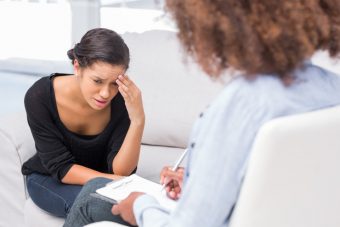 As a white cis-gender female therapist I am conscious of the fact that a Black female-identified client may open up more cautiously in a cross-racial therapeutic relationship than they would with a BIPOC female therapist in the CLS practice. What was surprising to me in this study was the fact that very few Black women reported “unwanted” sex and those that did were in a specific age group.
  A big taboo subject for many Black women to discuss openly is their participation in Bondage & Discipline/Dominance & Submission/Sadism & Masochism