
Pleasure: Mutual Pleasure Matters

Pleasure goes beyond simply having orgasms. It’s about curiosity, connection and caring about your partner’s experience. Pleasure will look different for different people’s or a couples’ experiences and it can change across the lifespan. People in Ethical Non-Monogamous or Polyamorous relationships will also need to consciously explore how their stimulation and experiences with one partner may differ greatly from their sex life with another partner. Caregivers or parents will often ignore the topic of pleasure when providing sex education for their children at each stage of their developmental growth. Many adults are uncomfortable and lack their own education to provide thoughtful and loving guidance to their children or young ones about the importance that they are experiencing pleasure by themselves or with a partner, and equally committed to offering to give pleasure to their partners. Most parents were not taught this and because of their own embarrassment or shame are quick to defend this decision by stating that they’re kids are too young for sex and/or masturbation. This same blind spot or denial around discussing sexual pleasure can also occur when adult children are caring for their elder parents who are involved in sexual relationships. Adult children while fully grown adults, are still their parents’ children and have the ‘ick’ factor to get over in thinking about and frankly discussing sexuality with their parents and in some cases with the retirement or nursing home staff where they live. Pleasure is about balancing all the other sexual health principles with each partner’s authentic sexual curiosity. When a partner ‘fakes an orgasm’ or pretends they are enjoying stimulation a partner is providing they are contributing to their partner’s beliefs that what they are doing is actually what the receiver is enjoying. The sexual encounter is then not mutual nor authentic at all
Non-Exploitation: Sex Should Never Involve Manipulation or Coercion

Sexual exploitation happens when someone uses their power or dishonesty in a sexual relationship. This power imbalance may arise from differences in partners’ cognitive ability, intoxication level, or other circumstances that limit one person’s capacity to give full consent. Exploitation can also come in the form of verbal or non-verbal manipulation, psychological pressure, and/or guilt-inducing communication by one partner to another. Explicit force doesn’t need to be involved for exploitative sex to occur. For example, when one partner repeatedly threatens to end a relationship unless the other partner agrees to sexual activity, they are psychologically pressuring their partner and undermining joint sexual decision-making. Another example of exploitation occurs when one partner has sex outside the agreement they’ve made with their partner, (whether they have promised sexual exclusivity or are in an ethical non-monogamous relationship). When the betraying partner doesn’t use any STI protection with the secondary or outside partners without telling their primary partner and proceed to continue having unprotected sex with their primary partner, this is exploitative sex. What the betraying partner has exploited is their primary partner’s trust and lack of knowledge so that they aren’t able to fully consent to having unprotected sex. They have thus put their partner’s sexual health at risk while also breaking their promise of their sexual monogamy agreement. This is also true for partners in an ENM, or Poly agreement, for example when the primary couples agreed they would always have protected penetrative sex in consensual non-monogamous experiences with other partners.
Prevention: Precautions for Physical Health
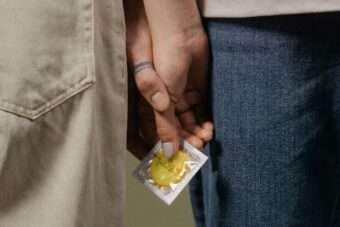
This is perhaps what people think of when the topic of sexual health comes up. It’s clearly imperative to discuss safer sex practices like condoms and other forms of birth control to prevent STIs as well as unwanted pregnancy. For example, before becoming sexually active with a new partner, each partner may decide to get tested for STIs and openly show and discuss the results so they can make informed decisions together. In addition, the sexual health principle of prevention also includes issues like: partners agreeing to not to continue penetration (anal or vaginal) if the receiving partner is having pain. As Certified Sex Therapists, taking painful penetration off the table for a little while until the condition can be treated medically is one of the first interventions proposed to partners when one partner reports pain during intercourse or anal sex. Psycho-education is provided in sex therapy on the long term physical and emotional damage that follows when people continually grind through a painful sexual experience. Consequences to pushing oneself or one’s partner through a painful penetration can include trauma symptoms to future initiations of intimacy. Post-trauma symptoms like: freeze, flight, fight, and fawning are common blocks to people having painful sex, The principle of prevention is all about making informed decisions as an individual for one’s sex and one’s partner and/or as a couple when it comes to partnered sex.
The Six Sexual Health Principles Mindset
Contrary to many people’s beliefs, sexual health isn’t only measured by frequency, fantasy or comparisons to what the rest of the country is doing. It’s built on mutual consent, pleasure, honesty, shared values, respect and protection of oneself and with whoever one has a sexual experience. These six sexual health principles help all types of partners and/or couples build a healthy and meaningful sexual relationship. Instead of asking, “Are we having enough sex?” try asking yourself and your partner(s):
- Do we feel safe communicating about sex?
- Do we adhere to each other’s boundaries?
- Are we honest about our needs?
- Do we both feel respected?
- Are we in full agreement as to how we will protect one another’s health?
Furthermore, these sexual health principles are never static. A healthy sexual relationship requires ongoing conversations with partners because all people’s bodies, desires, health, and circumstances will change over time including from day to day, and hour by hour.